
Why Winter Is the Busiest Season for the ER

Winter doesn’t just bring cold weather, it brings more emergencies.
Every year, emergency rooms see a sharp rise in visits once temperatures drop. Parents worry about high fevers, caregivers notice breathing changes, and adults slip on icy sidewalks or struggle with chest pain that can’t wait.
If you’ve ever searched “ER near me” during the winter, you’re not alone. This is the season when seconds matter, and knowing when to come in can make all the difference.
1. Winter Viruses Spread Faster (and Hit Harder)
Cold and flu season is the biggest reason ERs get busier in winter.
When people spend more time indoors, viruses spread more easily; especially among kids in school, families sharing space, and seniors in close living environments.
Common winter illnesses that send patients to the ER include:
- Influenza (flu)
- RSV, especially dangerous for infants and older adults
- COVID-19 and respiratory infections
- Pneumonia and bronchitis
Many of these start with mild symptoms but can quickly turn serious, especially when breathing is affected or fevers stay high.
Come to the ER right away for:
- Trouble breathing or shortness of breath
- High or persistent fever
- Chest pain or tightness
- Confusion, extreme fatigue, or dehydration
2. Cold Weather Makes Chronic Conditions Worse
Winter is especially hard on people with ongoing health conditions.
Cold air can trigger breathing problems, while seasonal illnesses put extra stress on the heart and lungs. That’s why ERs see more visits for:
- Asthma and COPD flare-ups
- Heart-related symptoms, including chest pain
- Low oxygen levels
- Complications from diabetes or weakened immune systems
For older adults and those with chronic illness, symptoms that might seem manageable in summer can become emergencies in winter.
If symptoms feel sudden, severe, or different than usual, the ER is the safest place to be.
3. Slips, Falls, and Winter Injuries Increase
Ice, snow, and freezing rain turn everyday tasks into hazards.
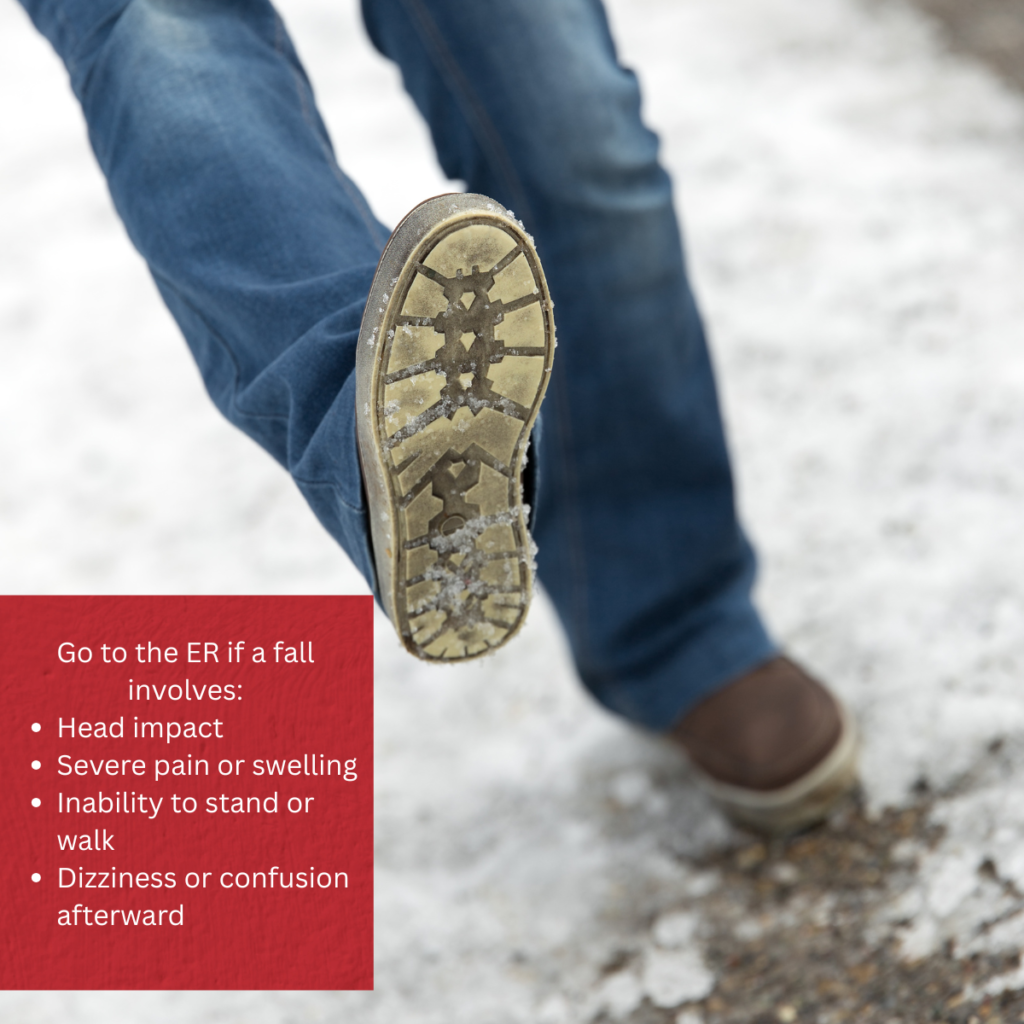
Each winter, ERs treat:
- Slips and falls on icy sidewalks or steps
- Broken bones and wrist fractures
- Head injuries and concussions
- Back and hip injuries; especially in seniors
Falls are one of the leading causes of ER visits in winter, and even a “small” fall can be serious, especially for children and older adults.
Go to the ER if a fall involves:
- Head impact
- Severe pain or swelling
- Inability to stand or walk
- Dizziness or confusion afterward
4. Holiday Stress and Mental Health Emergencies Rise
Winter isn’t just physically demanding, it’s emotionally heavy.
Shorter days, financial pressure, family stress, and isolation can increase:
- Anxiety and panic attacks
- Depression or suicidal thoughts
- Substance-related emergencies
Emergency rooms are equipped to provide immediate support, stabilization, and referrals for ongoing care.
If you or someone you love feels unsafe, overwhelmed, or at risk, the ER is always open.
5. Fewer Care Options Are Open, But the ER Always Is
During winter storms, holidays, and overnight hours:
- Primary care offices may be closed
- Urgent care locations may have limited hours
- Travel to out-of-town hospitals can be difficult or unsafe
That’s why local emergency rooms see higher volumes in winter. The ER is:
- Open 24/7
- Walk-in
- Fully equipped for serious emergencies
- Staffed for high-volume winter conditions
When you need help now, the ER is ready.
When Should You Come to the ER This Winter?
Come to the ER immediately for:
- Difficulty breathing
- Chest pain
- High fever in children or adults
- Signs of stroke or confusion
- Serious injuries or falls
- Worsening symptoms that can’t wait
If you’re asking yourself whether it’s an emergency, it’s okay to come in and be checked.
We’re Here When Winter Hits Hardest
Winter emergencies don’t wait, and neither do we.
When the weather is cold, roads are icy, and symptoms escalate fast, having a local emergency room you trust brings peace of mind.
Fast. Local. Life-Saving.
In emergencies, we’re right here.
FAQ
Winter brings higher patient volumes due to illness and injuries. Patients are seen based on medical urgency to ensure the sickest are treated first
For mild symptoms, urgent care may be appropriate. For breathing issues, chest pain, high fever, or serious injuries, the ER is the right choice.
Yes. Flu, RSV, dehydration, and breathing issues send many children to the ER during winter months.
Yes. Hospitals follow strict infection-control practices to protect patients and families.
Choosing a local ER close to home reduces travel risk and gets you care faster when conditions are unsafe.