
How Our ER and Walk-In Care Work Together for Your Safety
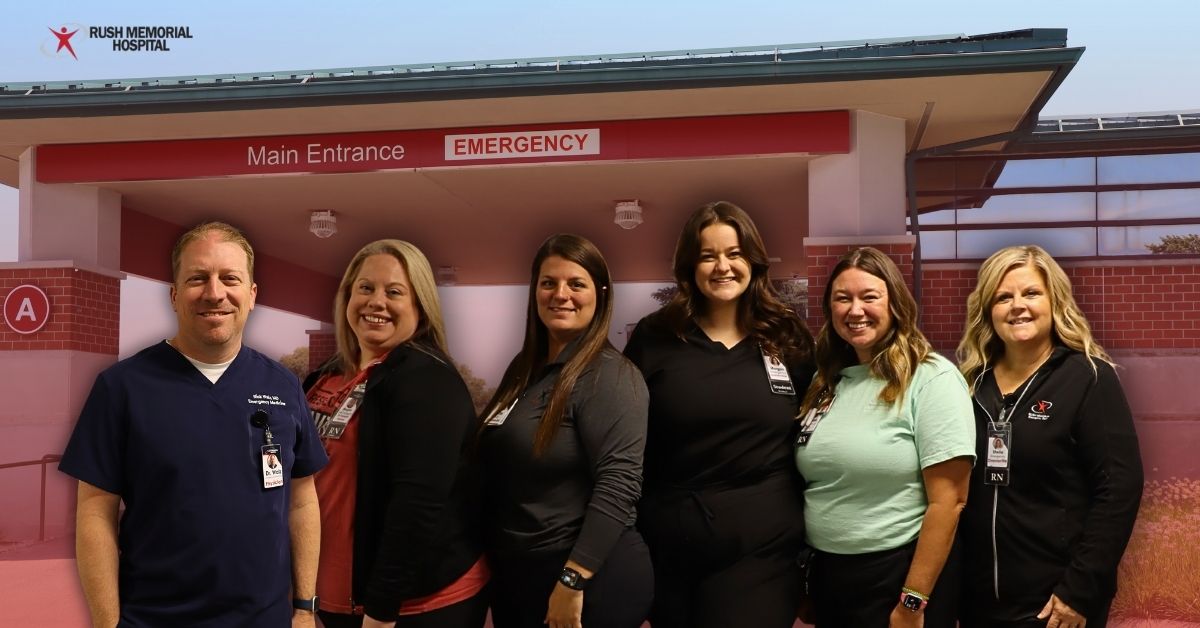
(Rush Memorial Hospital — Rushville, Indiana)
If you’ve ever stood in your kitchen at 8:30 p.m. with a sick kid, a painful ankle, or a chest “tightness” you can’t quite explain, you’ve probably asked the same question most of us do:
“Do I go to the ER… or can Walk-In Care handle this?”
At Rush Memorial Hospital, we think you deserve a clear answer without guessing, Googling, or second-guessing yourself. The good news: our Emergency Department (ER) and RMH Walk-In Care are designed to work as a team, so you get the right care in the right place, as safely and efficiently as possible.
Below is what that teamwork looks like, why it matters, and how to decide where to go when you need help.
Why this “two doors, one team” approach matters
Emergency departments nationwide are busy, the U.S. sees well over 100 million ED visits each year. When ERs are caring for both true emergencies and minor illnesses, it can slow the entire system down.
That’s where Walk-In Care helps. When patients with non-life-threatening issues choose Walk-In Care, it can:
- Keep the ER available for time-sensitive emergencies
- Reduce overall waiting and congestion
- Get you treated and back home sooner for common, straightforward concerns
At RMH, our Emergency Department is open 24 hours a day, 365 days a year, and serves over 7,000 visitors per year. RMH Walk-In Care provides same-day care with no appointment necessary and is open 7 days a week with posted clinic hours.
The simplest way to think about it
Walk-In Care = “Need care soon”
Walk-In Care is a good fit when you’re uncomfortable, worried, or need treatment today, but you’re not dealing with warning signs of a life-threatening emergency.
RMH Walk-In Care treats minor illnesses and injuries that are not life-threatening, especially when you can’t get in quickly with your primary care provider.
Emergency Department = “Need care now”
The ER is built for serious symptoms and conditions where time matters, including advanced testing, rapid stabilization, and hospitalization when needed.
How the ER and Walk-In Care work together (behind the scenes)
Even though you may enter through different doors, here’s what’s happening behind the scenes to support safety and continuity.
1) Smart “right place” guidance
When you call ahead, ask at registration, or describe your symptoms, staff may help guide you to the safest setting based on severity.
This is not about “sending you away.” It’s about matching you with the level of care you actually need, so emergencies get emergency resources, and routine issues get quicker, appropriate attention.
2) Clear escalation when symptoms change
Sometimes symptoms start mild and then worsen. If a Walk-In Care provider sees warning signs like breathing trouble, concerning vital signs, severe dehydration, or symptoms that require advanced imaging; patients can be directed to the ER for a higher level of evaluation.
3) Care coordination and follow-up
The end goal isn’t just “treat and street.” It’s:
- Help you understand what’s going on
- Give you a clear plan for next steps
- Point you to follow-up care when appropriate (primary care, specialists, repeat checks)
4) A consistent safety mindset
Both settings share the same priority: patient safety first. That means asking the right screening questions, watching for red flags, and being conservative when something doesn’t look right.
When to choose Walk-In Care
Walk-In Care is often a great option for common, non-life-threatening concerns, especially during the day, on weekends, or when you can’t wait for a primary care appointment.
Examples that are often appropriate for Walk-In Care include:
- Minor sprains/strains
- Mild asthma flare without severe breathing trouble
- Ear pain, sore throat, sinus symptoms
Mild to moderate fevers (when you’re otherwise stable) - Minor cuts that may need simple care
- Rashes without facial swelling or breathing symptoms
RMH Walk-In Care is located at 323 Conrad Harcourt Way in Rushville and has posted weekday/weekend hours.
When to go straight to the ER (or call 911)
Choose the ER when symptoms could be serious, rapidly worsening, or life-threatening.
Go to the ER or call 911 for things like:
- Chest pain/pressure, sudden shortness of breath
- Signs of stroke (face drooping, arm weakness, speech trouble)
- Severe bleeding, major injuries, significant head injury
- Severe allergic reaction (trouble breathing, swelling of lips/tongue)
- Seizures, fainting with concerning symptoms
- Severe abdominal pain, especially with vomiting or pregnancy concerns
- Any situation where you think someone may need hospitalization
If you’re unsure, it’s always okay to choose safety and go to the ER. (And when in doubt with severe symptoms, call 911.)
A quick note about waiting: why triage exists
People sometimes worry: “If I go to the ER, will I wait forever?”
ERs don’t work like a typical line. They use triage, which means the sickest patients are seen first. Nationally, many patients are still seen quickly—CDC data reports a substantial share of ED patients are seen in under 15 minutes (though this varies by day, staffing, and patient volume).
Triage can feel frustrating when you’re uncomfortable, but it’s a safety system designed to make sure life-threatening emergencies are treated immediately.
The bottom line
At Rush Memorial Hospital, your safety is the priority, not which door you walk through.
- Walk-In Care is a smart choice for many minor illnesses and injuries when you need help today.
- The ER is always available for serious symptoms and emergencies, 24/7, 365, and is prepared for everything from minor issues to life-threatening events.
And when your needs change, our teams are built to help you move to the right level of care.
FAQ
RMH Walk-In Care functions like what many people call “urgent care” same-day, no appointment care for non-life-threatening issues.
Emergency departments must provide a medical screening exam for anyone requesting evaluation, and stabilize emergency medical conditions under federal law (EMTALA).
That happens sometimes and it’s okay. If your symptoms or exam suggest you need more advanced evaluation, you may be directed to the ER for the safest next step.
Because of triage. The ER treats patients based on medical urgency, not arrival order so the most critical cases are seen immediately.
If you have severe symptoms (chest pain, stroke signs, trouble breathing, major trauma), go to the ER or call 911. If symptoms are bothersome but stable, Walk-In Care may be a good starting point. When in doubt, choose safety.
Rush Memorial Hospital is at 1300 N. Main St., Rushville, IN.
RMH Walk-In Care is at 323 Conrad Harcourt Way, Rushville, IN.
This guide is for general education and doesn’t replace medical advice.